Architecture
Why Spec Suites Win Tenants Faster: The Design Decisions That Close Deals

In commercial real estate, timing is everything. A vacant floor is a cost, and every day without a signed lease is lost revenue. That's why spec suites, pre-designed, move-in-ready office spaces have become one of the most powerful leasing tools in a developer's or landlord's arsenal. But not all spec suites are created equal. The ones that lease quickly aren't just furnished, they're strategically designed.
At AI Spaces, we've helped developers and building owners across Miami and Latin America design spec suites that don't just fill vacancy, they attract the right tenants at the right price. Here's what we've learned about the design decisions that actually move the needle.
First Impressions Are Signed Leases
A prospective tenant's decision starts forming the moment they step off the elevator. Before they see the conference room or the kitchen, they feel the space. Does it feel current? Does it feel like somewhere they'd want to come to work every morning? Does it communicate quality?
The entry experience, lighting, flooring material, and the first sight line must communicate value immediately. This isn't about luxury for its own sake; it's about perceived quality per dollar. Tenants comparing two spaces at similar price points will choose the one that makes them feel the premium. That feeling is engineered through design.
- Warm, layered lighting that avoids the harsh overhead-only look
- High-contrast finishes, think dark accent walls against light flooring
- Clean, uncluttered sight lines that make the space feel larger than its square footage
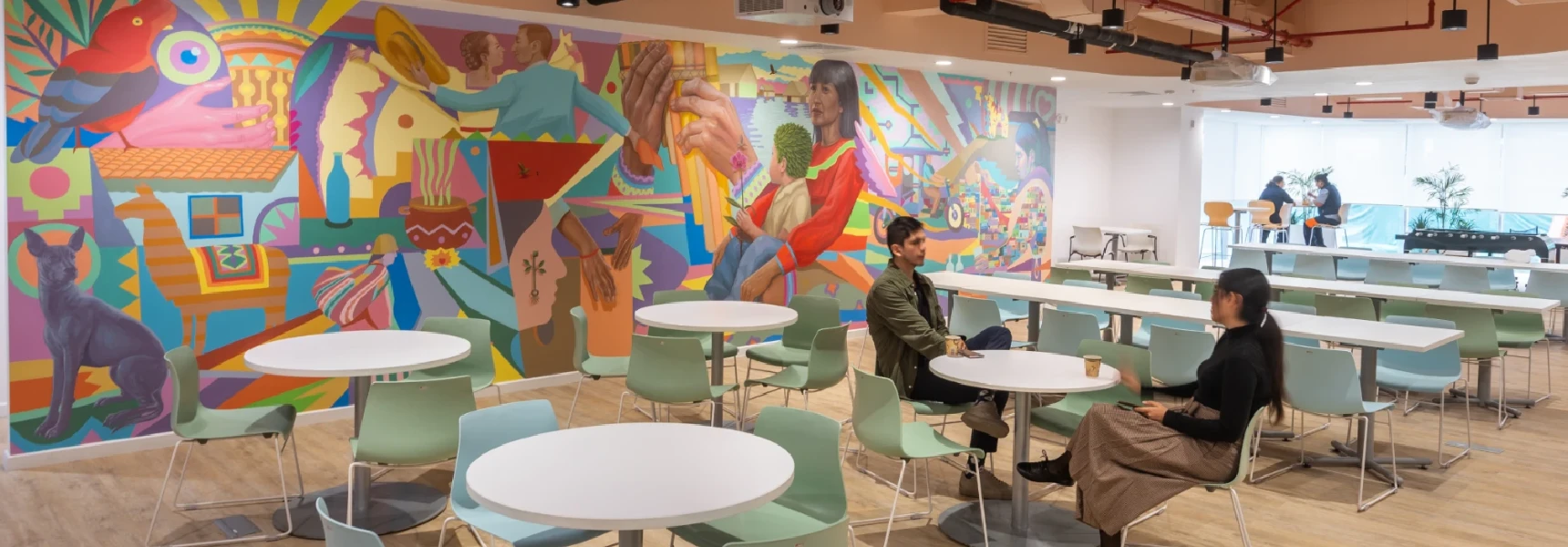
- A clear visual anchor, a feature wall, a reception desk, a curated material moment
.webp)
Design for the Tenant You Want, Not the Average Tenant
One of the biggest mistakes we see in spec suite design is the pursuit of "universal appeal" the idea that a neutral, inoffensive space will attract the broadest audience. In practice, generic spaces attract generic interest. A spec suite that speaks directly to a specific type of tenant, a professional services firm, a tech startup, a financial advisory group, creates an emotional connection that speeds up the decision.
This doesn't mean designing for one company. It means designing for a persona. Who occupies this building? What industries dominate the tenant mix? What does your ideal new tenant care about? Those answers should drive every finish selection and layout decision.
For a building in Brickell targeting financial and legal firms, that might mean:
- Rich, tailored materials like brushed metals, dark wood veneers, and stone surfaces
- Enclosed offices and formal conference rooms as primary features
- Quiet, sophisticated lighting that supports focused, individual work
For a creative district building targeting tech and media tenants, it shifts entirely, open zones, bold color, exposed elements, and collaborative infrastructure take center stage.
The Features Tenants Ask For in 2025
.webp)
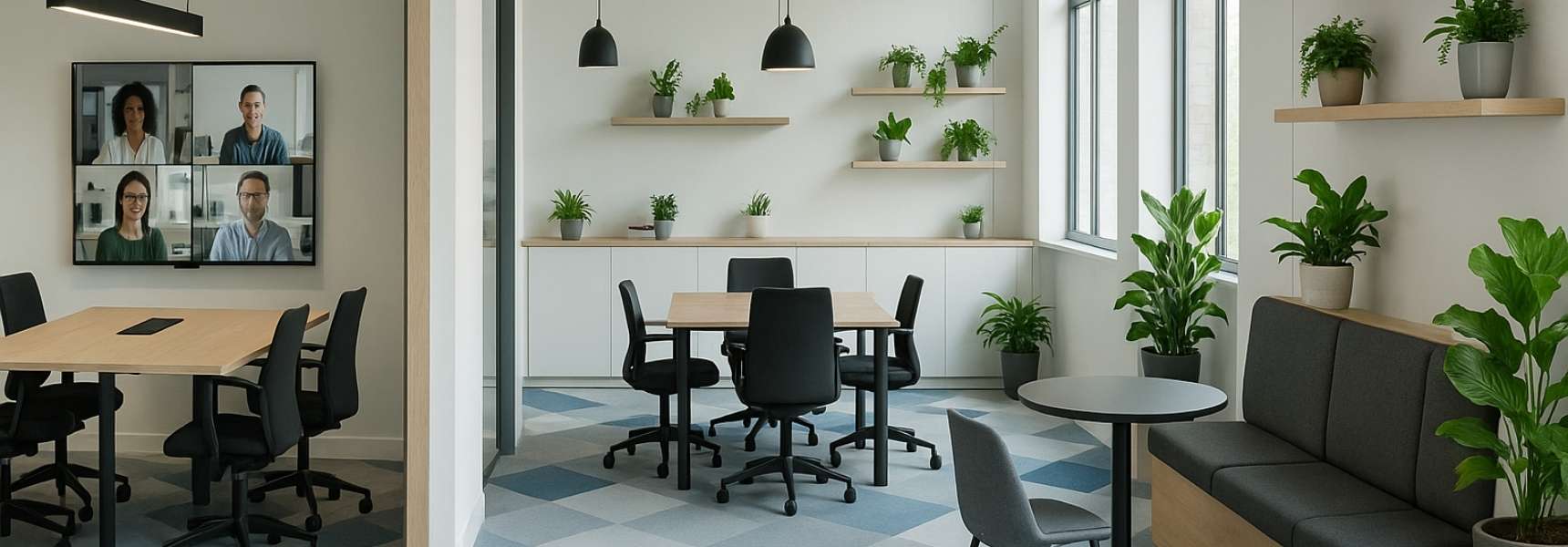
Tenant expectations have evolved significantly since the widespread adoption of hybrid work. Today's corporate tenants aren’t just looking for square footage, they're looking for a workplace that earns the commute. Their team has choices about where to work, and the office must justify itself.
- Private phone rooms and focus pods, hybrid work made open offices unusable for calls, and tenants know it
- At least one formal conference room with integrated A/V, video meetings are non-negotiable
- A kitchen or café bar that functions as a social anchor, people gather where there's coffee
- Acoustic treatment throughout, noise is the number one workplace complaint
- Flexible open areas that can serve as either collaboration space or temporary desking
- Biophilic touches, like plants, natural light, organic materials that support wellbeing
Spec suites that include these features lease faster and at higher price points. They're not amenities; they're the baseline expectation for post-pandemic corporate tenants.
Flexibility Is a Feature, Not an Afterthought
Every tenant that walks into a spec suite is already imagining how they'd change it. The good news: you can design that. The best spec suites are built with flexibility baked in, movable partitions, electrical and data infrastructure placed to support multiple configurations, and furniture that can be reconfigured without a contractor.
This flexibility has a dual benefit. It reduces the friction for tenants who want minor changes before signing, which speeds up negotiations, and it extends the useful lifespan of the suite between tenants, reducing future renovation costs for the landlord.
From a design standpoint, flexibility means thinking about space not as a fixed product but as a platform. The architecture and core finishes are permanent; everything layered on top should be movable, adaptable, and tenant customizable.
Sustainability Signals Value
A growing segment of corporate tenants, particularly larger companies with ESG commitments, actively seek out spaces that align with their sustainability goals. A spec suite that incorporates energy-efficient lighting, low-VOC materials, and certified sustainable finishes gives these tenants a reason to choose your building over a competitor's.
Beyond attracting tenants, sustainable design lowers operating costs, supports LEED or WELL certification, and positions the building favorably for investors and future buyers. It's one of the few design decisions that benefits every stakeholder simultaneously.
The ROI of Getting It Right
A well-designed spec suite is not a cost; it's a leasing accelerator. When a space photographs well, tours well, and requires minimal tenant improvement negotiation, it closes faster. Faster closings mean less vacancy, lower concession pressure, and better net effective rents.
We've seen this play out with our clients. Brokers like those at CBRE and Newmark, who regularly bring tenants to AI Spaces-designed environments, consistently report that our spec suites generate more second visits and shorter decision cycles than the market average. That's not coincidence; it's the result of intentional design decisions made before a single prospective tenant walks in.
Design Is a Leasing Strategy
The vacancy problem is rarely a location problem or a pricing problem; it's often a presentation problem. Spec suites that lease fast are the ones where design and leasing strategy were developed together from day one, not sequentially.
At AI Spaces, we partner with developers, landlords, and brokers at the earliest stage of a project to ensure that every design decision serves a business outcome. We don't design spec suites to look good in renderings. We design them to be signed.
Related Articles You May Find Helpful
For Landlords & Developers
- How We Cut Spec Suite Build Time by 30% in Miami (Real Case Study) — a real case study on cutting spec suite build time by 30% in Miami.
- Calculating the ROI of a Spec Suite — a landlord's guide to calculating the ROI of a spec suite.
- Why Spec Suites Win Tenants Faster — the design decisions that help spec suites close deals faster.
For Brokers & Tenants
- What Brokers Won't Tell You About Spec Suites But You Need to Know — what brokers don't always tell you about spec suites.
- Full Build-Out vs. Tenant Improvement — a tenant's guide to full build-outs vs. tenant improvements.
- Spec Suites or Custom Fit Outs—Which Office Strategy Fits Your Business? — weighing spec suites against custom fit-outs for your office strategy.
- Spec Suite Tenant Success — what sets successful spec suite tenants apart.
Industry Trend
- The Evolution of the Office — why spec suites are shaping the future of commercial leasing.
- How Spec Offices Are Shaping the Future of Work — how spec offices are shaping the future of work.
Technology
- Closing Deals Faster: AI-Powered Space Planning for Florida Brokers — how AI-powered space planning helps Florida brokers close deals faster.
Planning a spec suite rollout?
Let's talk strategy : book a free consult at aispaces.ai