Innovation
5 Costly Commercial Kitchen Design Mistakes (And How to Avoid Them)
.webp)
Images Santiago Muñoz | project Sorella
When it comes to commercial kitchen layout design, even small errors in planning can cost restaurants thousands in lost time, energy inefficiency, and safety issues. The key to success is designing workflow before aesthetics.
A well-designed kitchen can boost service speed by 30%, reduce labor costs, and improve staff safety. Yet, many owners underestimate how ergonomics and ventilation affect profitability.
Below, we break down the five most expensive mistakes and how to fix them.
For the full framework, check out our complete guide on Restaurant & Hospitality Interior Design.
1. Ignoring the Flow of Movement
The Mistake: Designing the kitchen around equipment rather than workflow. This leads to collisions, wasted steps, and longer ticket times.
Why it matters: Every extra second a chef spends walking between prep, cooking, and plating areas compounds into higher labor costs.
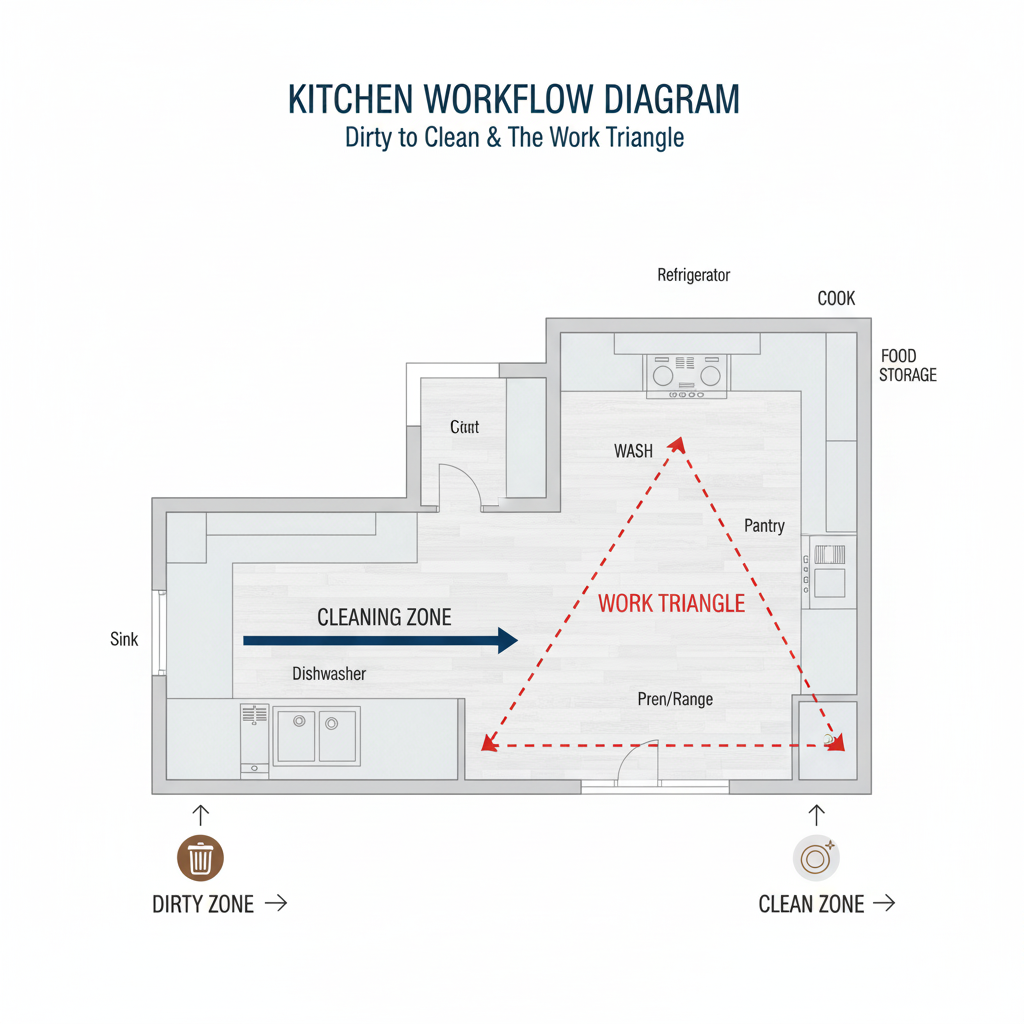
- The Fix: Design using the "Kitchen Work Triangle" or "Assembly Line" model. Use tape to mockup real-world movement before construction begins.
2. Underestimating Ventilation and Heat Zones
The Mistake: Placing fryers, ovens, and grills too close to cold prep or dishwashing areas.
Why it matters: Poor air balance overworks HVAC systems and creates uncomfortable conditions, leading to staff turnover, one of the biggest hidden costs in hospitality.
- The Fix: Engage a mechanical engineer early. Ensure hood sizes and make-up air systems are balanced for your specific equipment line.
3. Overcrowding or Undersizing the Kitchen
The Mistake: Allocating space based on guesswork. A cramped kitchen slows prep; an oversized one eats into revenue-generating dining space.
Why it matters: The industry benchmark is 35–45% of total floor area for back-of-house, though fast-casual models may need less.
- The Fix: Prototype your kitchen using 3D software. Simulate staff routes and check for at least 48 inches of clearance between primary workstations.
4. Neglecting Cross-Contamination and Code Compliance
The Mistake: Overlapping raw and cooked food zones or failing to plan hand-washing stations. This violates health codes and risks shutdowns.
- The Fix: Layout stations by task category (receiving, prep, cook, plating, dish). Use color-coded floor plans to ensure flow from "dirty" to "clean." Always review plans with a local health inspector before construction.
5. Forgetting Future Growth
The Mistake: Designing only for launch day menu. Static layouts make it expensive to adapt later.
- The Fix: Plan for modularity. Leave 10–15% of open space for future equipment and provide clear service access to electrical and gas connections.
Pro Tip: Efficiency Over Aesthetics
The most successful kitchens are designed like factories: clean, durable, and intuitive. Prioritize your design hierarchy in this order:
- Workflow
- Safety
- Hygiene
- Efficiency
- Aesthetics
.webp)
Common Questions (FAQs)
What is the best layout for a commercial kitchen?
It depends on your concept. The Assembly Line is ideal for fast service, while the Island Layout works well for large, open kitchens with multiple courses.
How can I make a small restaurant kitchen more efficient?
Focus on vertical storage and multifunctional equipment. Use mobile prep stations and keep hot/cold areas strictly separated to maximize the utility of every square foot.
Do I need a professional kitchen designer?
Yes. Contractors focus on construction execution, not workflow. A professional designer ensures your layout meets health codes and optimizes throughput, saving you from costly rework.
Planning a new restaurant?
Our team specializes in data-driven kitchen design that minimizes risk and maximizes throughput. Don't leave your efficiency to chance.

More Articles to Keep Designing Your Workspace
Guides, inspiration and workspace ideas