Design
Strategic Law Firm Office Interiors That Inspire Trust
Why Invest in Law Firm Office Interior Design?
The moment a client steps into a law firm, their perception of credibility, trust, and professionalism is already forming—often before a single word is spoken. This is why investing in law firm office interior design isn’t just about aesthetics—it’s a strategic decision that directly affects client impressions, employee productivity, and brand identity. Especially in today’s competitive legal environment, the right interior layout becomes a silent ambassador for your firm’s values and service quality.
Whether you operate a large corporate legal practice or a boutique firm, your physical space communicates volumes about how you do business. From layout and lighting to material choice and acoustic comfort, every element should be intentionally designed to support both the legal work being done and the client experience. This is even more critical for small practices where efficient space use and a tailored small law firm office layout can dramatically enhance daily operations.
For the full framework, check out our complete guide on Law Firm Office Design.
The Role of Office Design in Law Firms
Legal work is demanding—it requires focus, confidentiality, and precision. Your office environment should support these needs while also being welcoming to clients. An effective interior design plan balances private and collaborative spaces, includes soundproofing measures, and provides areas that reflect your firm’s brand culture.
Modern clients expect more than a row of desks and a reception area. They expect a sense of place that reflects trust, capability, and sophistication. Law firm interior design now embraces flexibility, technology integration, and biophilic elements (like natural light and plants) to not only meet expectations—but exceed them.
First Impressions Matter
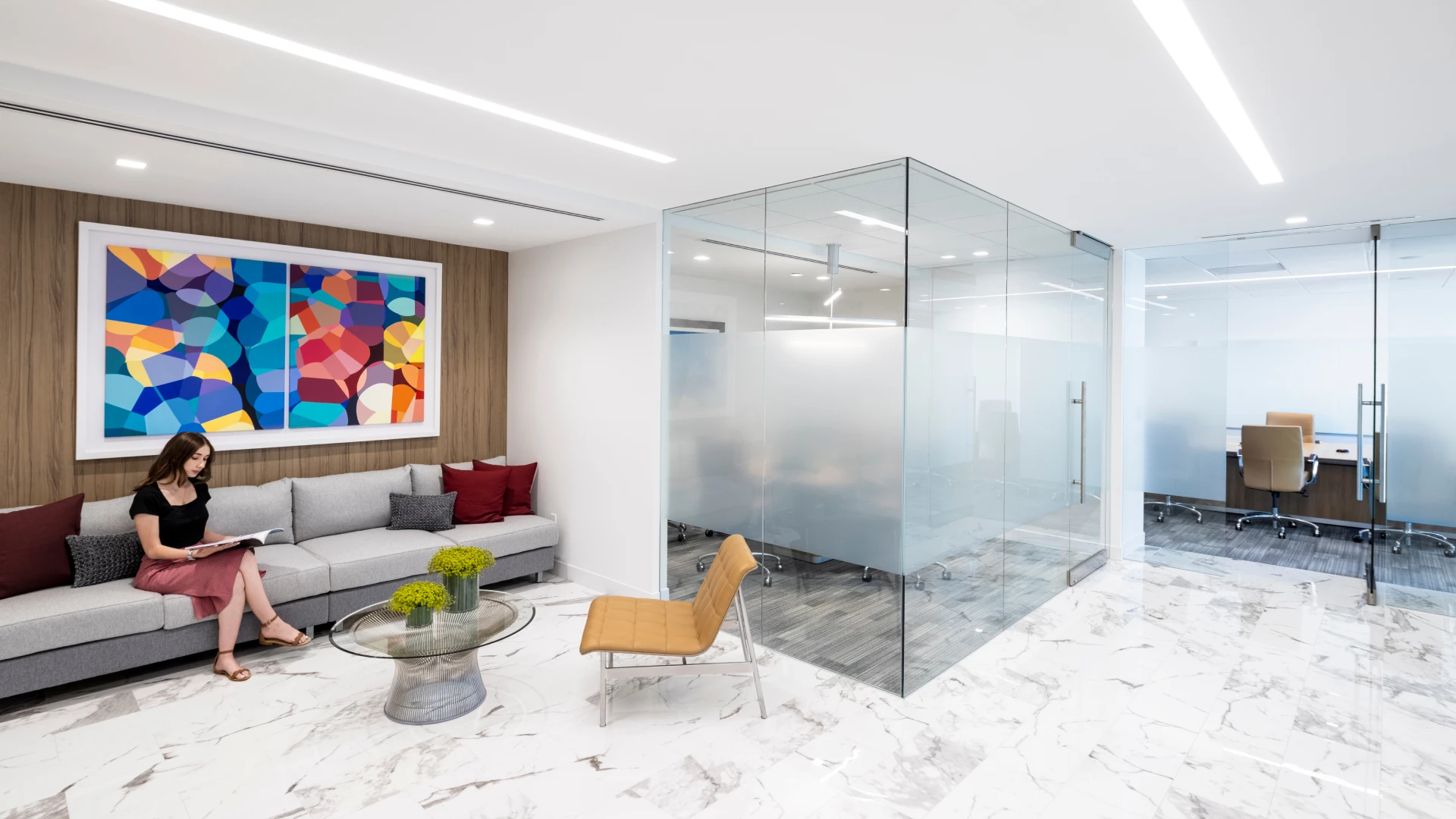
Reception areas are often the first touchpoint with clients. A cramped or outdated reception room can unintentionally signal disorganization or stagnancy. By contrast, a well-designed entrance with refined finishes, intuitive flow, and brand-aligned artwork sets a tone of professionalism and confidence.
Adding subtle details like branded signage, ergonomic guest seating, and thoughtful lighting can turn your reception area into a silent testimonial of your firm's values. Especially in small law firms, every square foot counts—and designing with intention ensures that even modest entry spaces impress.

Optimizing Small Law Firm Office Layouts
Designing for a small law firm doesn’t mean sacrificing functionality or beauty. In fact, thoughtful planning becomes even more important in compact environments. The key lies in multipurpose design, modular furniture, and smart storage solutions.
Here are essential strategies:
- Private Offices & Acoustic Zones: Create soundproofed areas for confidential conversations.
- Shared Resource Hubs: Centralize printers, legal libraries, and filing systems to reduce redundancy.
- Flexible Meeting Rooms: Use glass-partitioned spaces to preserve openness while maintaining privacy.
- Built-In Storage: Maximize vertical and hidden cabinetry to minimize clutter.
Supporting Productivity Through Design
Research consistently shows that physical space affects concentration and productivity. In law firms—where mental clarity and long hours are standard—this is especially critical.
Priorities should include:
- Natural Light
- Ergonomic Workstations
- Quiet Zones
- Collaboration Areas
Branding Through Design
Every law firm has a personality. Whether your firm is known for innovation, tradition, community involvement, or luxury service, your space should reflect that.
Key branding design elements:
- Color schemes and materials that mirror brand values
- Branded signage and custom architectural touches
- Client-facing artwork that speaks to your practice
Sustainability and Wellness in Legal Environments
Sustainable design is no longer a bonus—it’s an expectation. LEED-certified materials, indoor air quality improvements, and energy-efficient lighting signal long-term thinking and care for both people and the planet.
Biophilic design elements improve cognitive function and reduce stress—an essential benefit in high-pressure legal environments.
Technology Integration
The modern legal practice is digital. Your office must support:
- Video conferencing and smart meeting rooms
- Secure networks and digital workflows
- Discreet cable management and power access
The Cost of Doing Nothing
Delaying redesign can cost more in the long term—through lost billable hours, poor client impressions, and employee dissatisfaction. Interior design is not just an investment in your space—it's an investment in your success.
Ready to Reframe the Way Clients See You?
At AI Spaces, we don’t just design offices—we craft environments that speak volumes before you ever say a word. If your law firm’s space could use a strategic edge, we’re ready to design with purpose.
Let’s start with one question: What does your office say about you, before you even enter the room? Let’s make sure the answer is exactly what you want it to be.
Frequently Asked Questions: Law Firm Office Layout and Design Strategy
- What is the best office layout strategy for a small law firm with limited square footage?
- Small law firms benefit most from multipurpose design, combining private soundproofed offices for confidential work with flexible glass-partitioned meeting rooms and centralized resource hubs for printers and filing. A commercial interior design firm can map this layout to maximize every square foot without sacrificing the professionalism clients expect.
- How can a boutique law firm in Miami compete visually with larger firms through office design?
- Strategic investment in client-facing areas, including a refined reception, well-appointed conference room, and branded architectural finishes, creates an outsized impression relative to firm size. AI Spaces works with small and mid-size legal practices to design spaces that signal credibility and sophistication regardless of square footage.
- What soundproofing solutions should be included in a law firm office layout?
- Acoustic panels, solid-core doors with acoustic seals, double-glazed glass partitions, and sound-masking systems are the most effective solutions. These should be integrated at the design phase by an architecture firm to ensure they meet both performance and aesthetic requirements.
- How does office layout affect productivity in a law firm?
- Layout directly influences attorney focus, collaboration efficiency, and client experience. Quiet zones for deep work, natural light at workstations, ergonomic furniture, and clearly defined circulation paths all contribute to reduced cognitive fatigue and higher billable output.
- What sustainable design features are appropriate for a law firm office renovation in Miami?
- LEED-certified materials, energy-efficient LED lighting, indoor air quality improvements, and biophilic elements such as living walls and natural ventilation are all appropriate for Miami's climate and increasingly expected by clients and staff who value environmental responsibility.
- How long does a law firm office interior design project typically take from concept to completion?
- A full law firm office renovation including design, permitting, and construction typically takes 4 to 9 months depending on scope and building requirements. Phased approaches can reduce downtime for active practices. AI Spaces manages the full process from space planning through permit coordination and FF&E installation.
- When is the right time for a law firm to hire an interior design and architecture firm for an office redesign?
- The best time is before lease renewal, firm expansion, or a rebranding initiative. Engaging an architecture firm early allows for space planning that aligns with headcount projections, brand direction, and technology needs, avoiding costly redesigns down the line.