Architecture
Essential Acoustic Solutions for Modern Law Firms
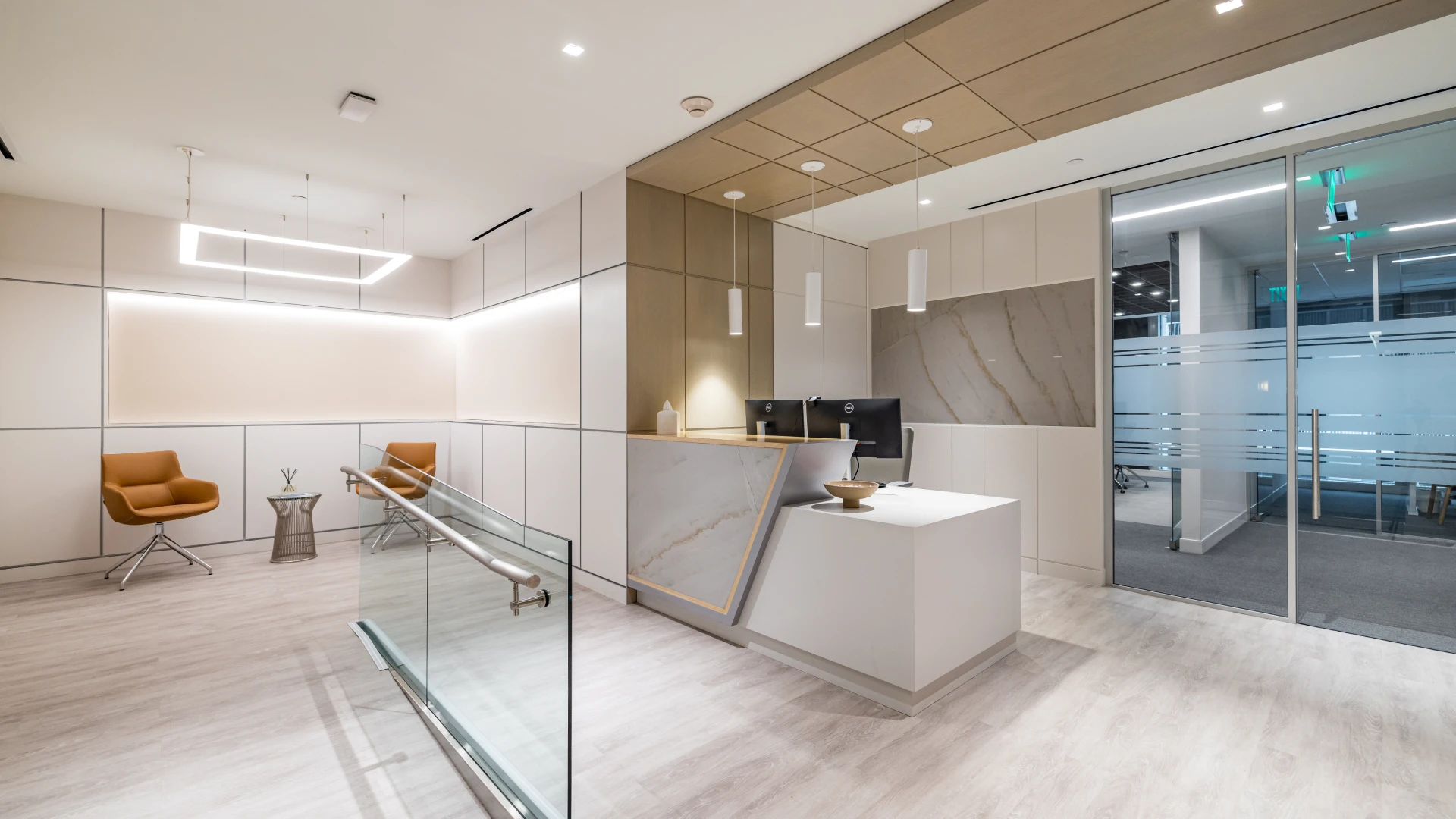
Legal Workplace Design
Image AI Spaces | Project Kennedy Law
Attorney–client privilege depends on speech privacy. Yet many modern law offices unknowingly amplify sound through thin walls or glass gaps. When acoustics fail, confidentiality fails.
Effective law firm office interior design requires a combination of upgraded wall assemblies, acoustic glass, and sound-masking systems to prevent leakage.
For the full framework, check out our complete guide on Law Firm Office Design.
The Glass Dilemma: Beauty vs. Confidentiality
Glass reflects sound instead of absorbing it. Common issues include weak door seals and "sound channels" in corridors. The Solutions:
- Double-glazing or laminated acoustic glass.
- Drop seals for glass doors (critical).
- Acoustic curtains for flexible discretion.
Targeted Acoustic Solutions
| Acoustic Need | Best Solution | Ideal Location |
|---|---|---|
| Reduce leakage between rooms | Acoustic drywall, insulation, sealed penetrations | Partner offices |
| Improve glass privacy | Double-glazed systems, laminated glass | Boardrooms |
| Reduce echo | Ceiling baffles, wall panels | Open areas |
| Mask intelligible speech | Sound masking (white noise) | Corridors |
Sound Masking: The Quiet Hero
Sound masking introduces a neutral background noise that makes distant speech less intelligible. It does not replace proper construction, but it dramatically enhances confidentiality in open areas and corridors.
What Partners Should Fix First
Prioritize rooms where sensitive conversations happen most often to get the highest legal ROI:
- Conference Rooms
- Partner Offices
- Litigation War Rooms
- Phone/Focus Rooms
Concerned About Sound Leakage?
We can perform a confidential acoustic audit of your workplace, assessing risks and recommending targeted improvements to protect privilege.
Request Acoustic Audit