Architecture
Essential Acoustic Solutions for Modern Law Firms
Confidentiality is the backbone of legal practice. Without it, trust erodes, risk increases, and professional credibility suffers.
Law firm acoustic solutions are no longer a secondary design concern, they are a fundamental operational requirement. As law offices evolve toward more collaborative and space-efficient layouts, controlling sound has become both more complex and more critical.
This guide explains how modern law firms can design acoustically secure workplaces that protect attorney–client privilege, support focused work, and still feel contemporary rather than bunker-like.
For the full framework, check out our complete guide on Law Firm Office Design.
Why Acoustics Matter More Than Ever in Law Offices
Legal offices host some of the most sensitive conversations in any professional environment. Mergers, litigation strategy, personal disputes, and financial matters all require absolute discretion.
However, modern pressures, real estate costs, hybrid work, and talent expectations—have pushed many firms toward layouts that unintentionally compromise privacy.
Common Acoustic Risks in Law Firms
- Conversations overheard through glass walls.
- Sound traveling between offices via ceilings or corridors.
- Meeting room speech bleeding into reception areas.
- Attorneys distracted by phone calls and hallway noise.
These issues don’t just create discomfort, they introduce real legal and reputational risk.
Soundproofing vs. Sound Absorption: Understanding the Difference
One of the most common mistakes in legal office design is assuming all acoustic products do the same thing. They don’t.
Effective law firm acoustic solutions combine all three strategies, not just one.
| Acoustic Strategy | Purpose | Typical Law Firm Applications |
|---|---|---|
| Soundproofing | Prevents sound from traveling between rooms | Partner offices, conference rooms |
| Sound absorption | Reduces echo and noise buildup within a space | Open areas, corridors, reception |
| Speech masking | Reduces speech intelligibility at distance | Hallways, shared circulation |
Step 1: Acoustic Zoning as the Foundation
Before materials are selected, acoustics must be addressed at the planning level.
- High-Privacy Zones: Partner offices, Conference rooms, Mediation rooms.
- Medium-Privacy Zones: Associate offices, Focus rooms, Small meeting rooms.
- Low-Privacy Zones: Reception, Break areas, Open collaboration spaces.
Best practice: Never place high-privacy rooms directly adjacent to low-privacy areas without acoustic buffers such as storage walls, copy rooms, or corridors.
Step 2: Designing Truly Private Offices
Private offices are expected to be acoustically secure, but many are not. Glass-fronted offices can still work, but only when paired with acoustically rated glazing and full perimeter seals.
Key Soundproofing Elements
- Wall construction: Double-stud or staggered-stud assemblies (Minimum STC 45, Best Practice STC 50+).
- Doors: Solid-core doors with perimeter seals and drop bottoms.
- Ceilings: Full-height partitions to deck whenever possible.
Step 3: Conference Rooms and Attorney–Client Spaces
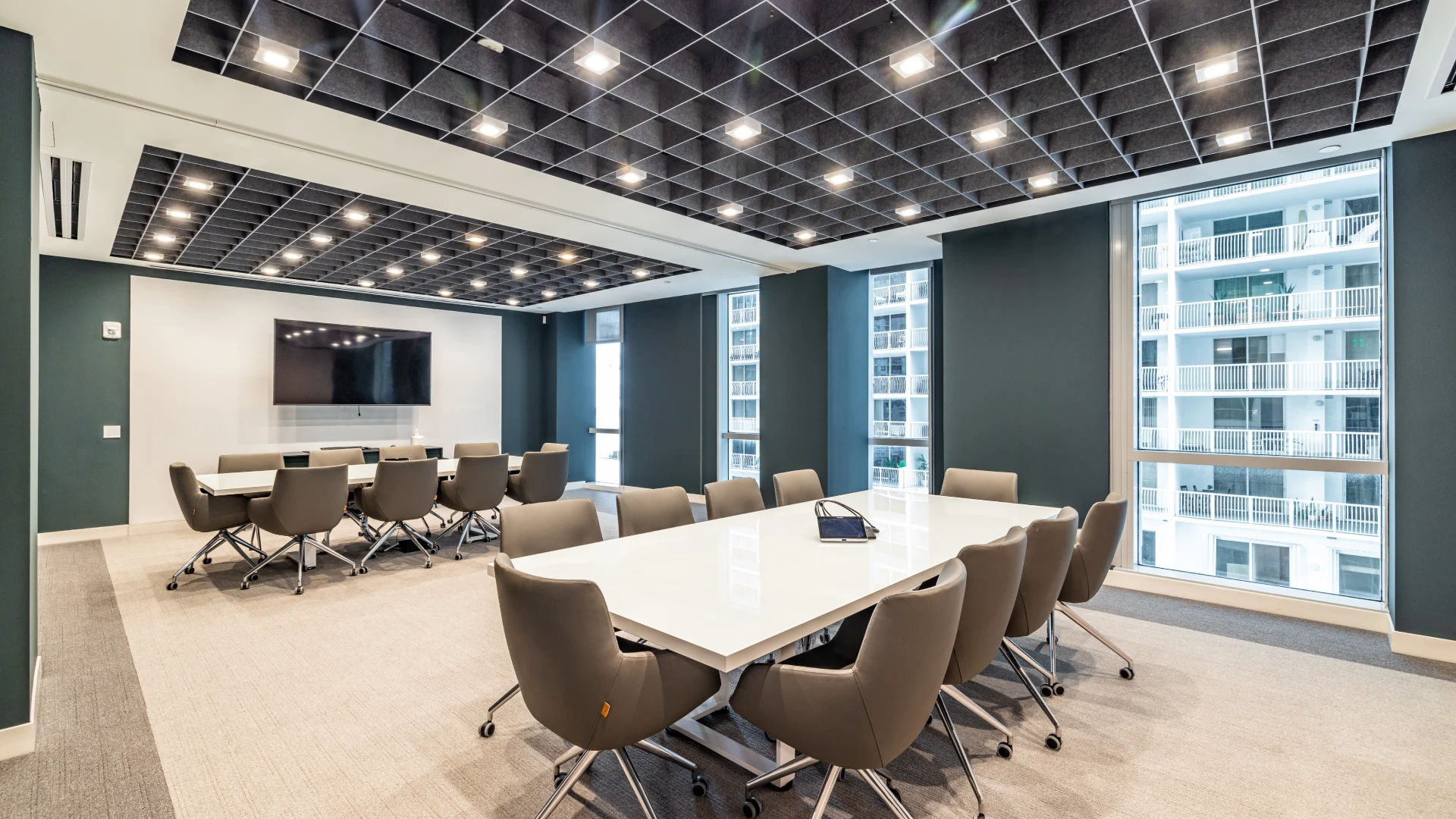
Conference rooms are the highest-risk spaces for sound leakage. Common failure points include shared ceiling plenums, non-rated glass walls, and inadequate door gasketing.
What most firms miss: Sound often escapes above the wall, not through it.
Design Strategies That Work
- Acoustic wall panels at speech height.
- Carpet tile with acoustic backing.
- White noise systems outside the room.
Step 4: Managing Sound in Reception and Waiting Areas
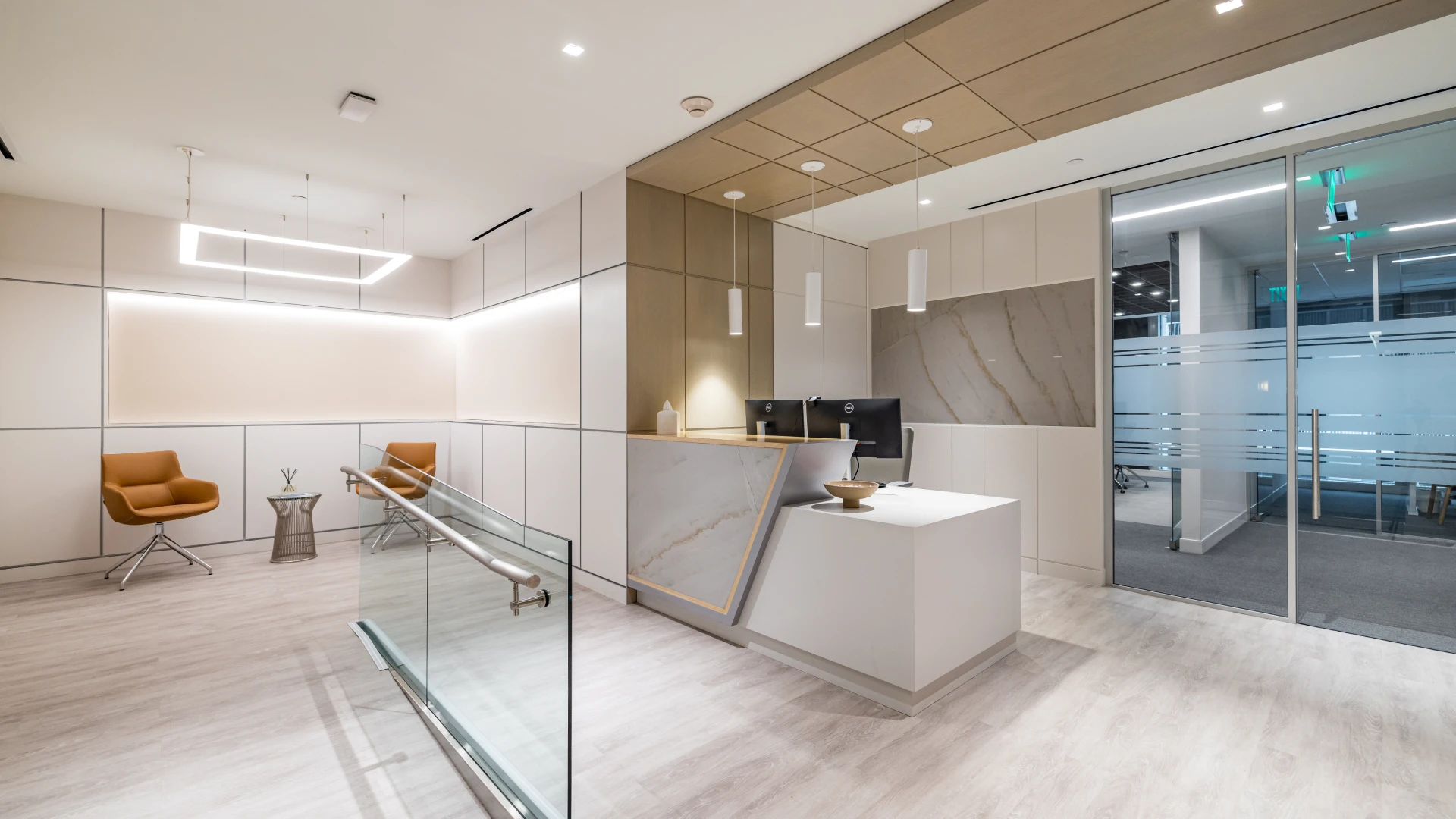
Reception spaces set the tone for the firm, but they’re also where privacy is most vulnerable. A quiet reception communicates professionalism and control.
- Upholstered seating: Absorbs ambient noise.
- Acoustic wall finishes: Reduces echo.
- Spatial separation: Limits speech overlap.
Step 5: Supporting Focus and Attorney Productivity
Beyond confidentiality, acoustics directly affect cognitive performance. Poor sound control leads to reduced concentration, higher fatigue, and increased errors. Modern law offices must support both deep individual focus and confident verbal communication.
Mini Case Example
A 40-attorney firm undergoing renovation opted for glass offices to improve daylight. Early mockups revealed sound bleed. By upgrading wall assemblies and installing speech masking, the firm achieved both visual openness and verified speech privacy without increasing the footprint.
Acoustic Planning Checklist for Law Firms
- ☑ Acoustic zoning defined during space planning
- ☑ STC-rated partitions for private offices
- ☑ Acoustic doors with full seals
- ☑ Absorptive finishes in shared areas
- ☑ Speech masking where appropriate
Frequently Asked Questions (FAQs)
- How soundproof should a law office be?
- Private offices and conference rooms should achieve STC 45–50 minimum to ensure conversations are unintelligible outside the room.
- Are glass offices a bad idea for law firms?
- Not if properly detailed. Acoustic-rated glass, full-height partitions, and sealed doors are essential.
- Does open office design work in legal environments?
- Only when limited to non-confidential roles and paired with strong acoustic controls.
- Can acoustics be improved without renovation?
- Yes. Panels, upgraded doors, white noise systems, and furnishings can significantly improve performance.

More Articles to Keep Designing Your Workspace
Guides, inspiration and workspace ideas