FeaturedBlog
How We Cut Spec Suite Build Time by 30% in Miami (Real Case Study)

Every month a spec suite sits unfinished is a month of lost rent for the landlord holding it. That is the core economics behind this spec suite construction case study: a Class A building in Downtown Miami where AI Spaces restructured the build sequence and cut delivery time by 30 percent, turning a stalled floor into leased, income-producing space months earlier than the original schedule allowed.
The Starting Point
The building, a Class A tower in Downtown Miami, had a partially built spec suite that had been quoted by another contractor at a standard sequential timeline: permitting, then framing, then MEP rough-in, then finishes, each phase waiting for the prior one to fully close out before starting. On paper that is a defensible, low-risk sequence. In practice, it meant the suite would sit vacant for months longer than the ownership group could tolerate, with carrying costs accumulating the entire time and no tenant able to tour a finished space.
How AI Spaces Restructured the Build
The compression did not come from cutting corners. It came from rethinking the sequence itself:
- Parallel trades: electrical, mechanical, and framing crews were scheduled to overlap in different zones of the floor plate simultaneously, instead of one trade fully closing out before the next began.
- Pre-fabricated elements: millwork, certain partition assemblies, and lighting packages were fabricated off-site while permitting and rough-in were still underway on-site, so those components arrived ready to install rather than built from scratch on the floor.
- Faster material sourcing: long-lead finish items were locked and ordered during the design phase itself, rather than waiting for construction documents to fully finalize before releasing purchase orders.
Each of these moves shaves time off a different part of the schedule, and the effect compounds when they are used together rather than in isolation.
The 30% Time Reduction, Phase by Phase
| Phase | Standard Timeline | AI Spaces Timeline | Weeks Saved |
|---|---|---|---|
| Permitting | 6 weeks | 5 weeks | 1 week |
| Framing & MEP rough-in | 8 weeks | 5 weeks (parallel trades) | 3 weeks |
| Finishes & millwork install | 6 weeks | 4 weeks (pre-fabricated) | 2 weeks |
| Punch list & closeout | 2 weeks | 1.5 weeks | 0.5 week |
Total: a 22-week standard schedule compressed to roughly 15.5 weeks, a reduction of approximately 30 percent, without changing the finish quality or scope of the suite.
The Business Impact
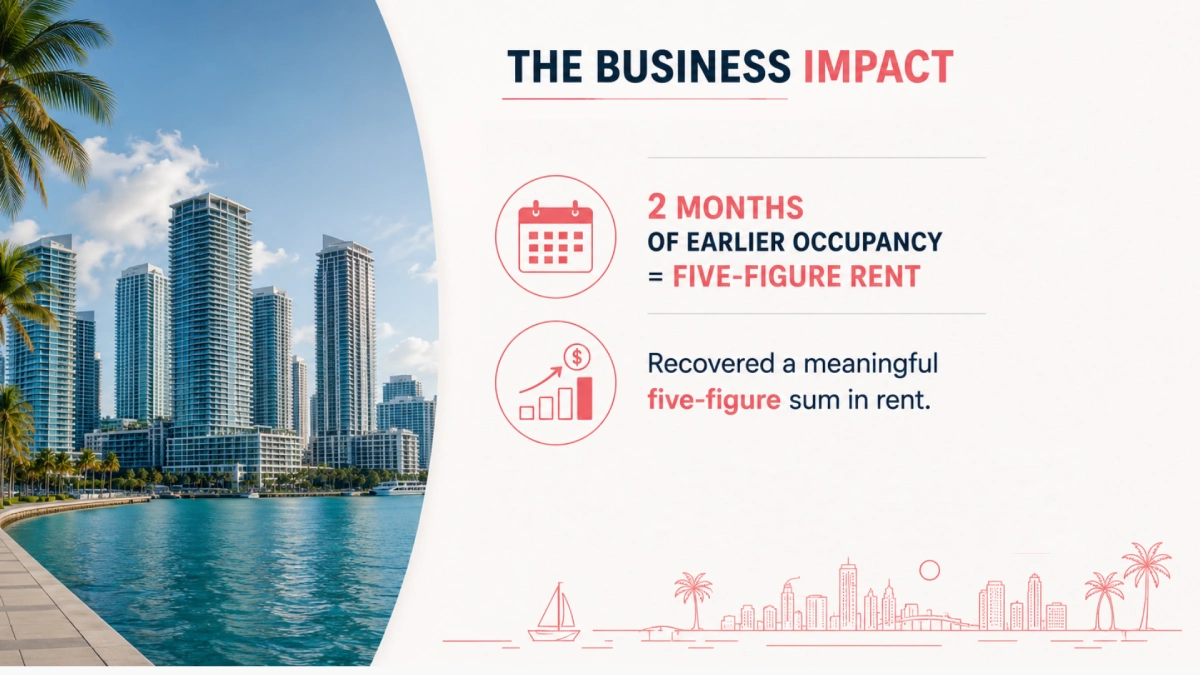
For the ownership group, the compressed timeline translated directly to leasing economics. The suite was market-ready and available to tour more than six weeks earlier than the original schedule projected, which allowed the leasing team to close a tenant nearly two months sooner than the standard-timeline case. At the building's asking rent for that floor plate, two months of earlier occupancy recovered a meaningful five-figure sum in rent that would otherwise have been lost to an unfinished suite sitting vacant.
Why This Sequence Does Not Work Without the Right Relationships
Parallel trade scheduling and pre-fabrication sound straightforward on paper, but they depend entirely on relationships that have to already exist before the project starts. Overlapping electrical and framing crews in the same zone requires trade partners who trust each other's site sequencing enough to work side by side without one crew waiting on the other out of habit. Pre-fabricating millwork off-site while permitting is still pending requires a fabrication shop willing to start cutting against a near-final, but not yet permitted, drawing set, which is a risk most shops will not take for a general contractor they have not worked with before.
AI Spaces has built these trade and vendor relationships specifically around Miami spec suite work, which is why this sequencing is repeatable across buildings rather than a one-time result specific to this Downtown property. Property managers evaluating a build-time estimate should ask directly whether a contractor has run parallel-trade sequencing before, since it is not a technique every general contractor is set up to execute.
What Property Managers Should Ask Before Committing
- Has this contractor run parallel-trade scheduling on a comparable spec suite, and can they name the building?
- Which specific components will be pre-fabricated off-site, and what happens to the schedule if permitting comments require a design change after fabrication has started?
- What is the realistic floor on permitting time for this specific municipality, independent of anything the contractor controls?
A contractor who answers these questions with specifics, rather than a general assurance that the project will move fast, is the one whose 30 percent compression estimate is worth believing.
Frequently Asked Questions
- What is an agile build-out approach for a spec suite in Miami?
- An agile build-out overlaps trades and pre-fabricates components off-site instead of running phases strictly in sequence, compressing the overall schedule without cutting scope.
- How much can a fast spec suite construction company reduce build time?
- In this Downtown Miami case study, AI Spaces reduced total build time by approximately 30 percent, from 22 weeks to roughly 15.5 weeks, using parallel trade scheduling and pre-fabrication.
- What causes spec suite construction delays in the first place?
- The most common cause is a strictly sequential schedule where each trade waits for the prior one to fully close out, combined with releasing material orders only after construction documents are finalized.
- Does compressing the schedule affect finish quality?
- No. The time reduction in this case study came from resequencing and off-site fabrication, not from reducing scope, finish level, or inspection standards.
Managing a spec suite that is taking longer to deliver than your pro forma can absorb?
AI Spaces provides Miami property managers with a build-time estimate before construction starts, so you know what a compressed schedule actually looks like for your building before committing to a contractor.