Education
Learning Spaces That Inspire: What Modern School Design Gets Right

Walk into a school built fifty years ago and you already know how learning was supposed to work. Rows of desks facing a blackboard, a teacher at the front, silence reinforced by the space itself. The room communicated a clear message about knowledge, where it lived, who held it, and how it was transferred. That model served its time. It no longer serves ours.
Learning today is collaborative, self directed, technology integrated, and deeply social. Students are not passive recipients of information. They are active participants, working across disciplines, solving problems in teams, and preparing for careers that in many cases do not yet exist.
At AI Spaces, we design educational environments across the Americas. The most successful spaces do not simply accommodate education. They amplify it.
The Classroom Is No Longer the Only Learning Space
The entire campus functions as a learning ecosystem.
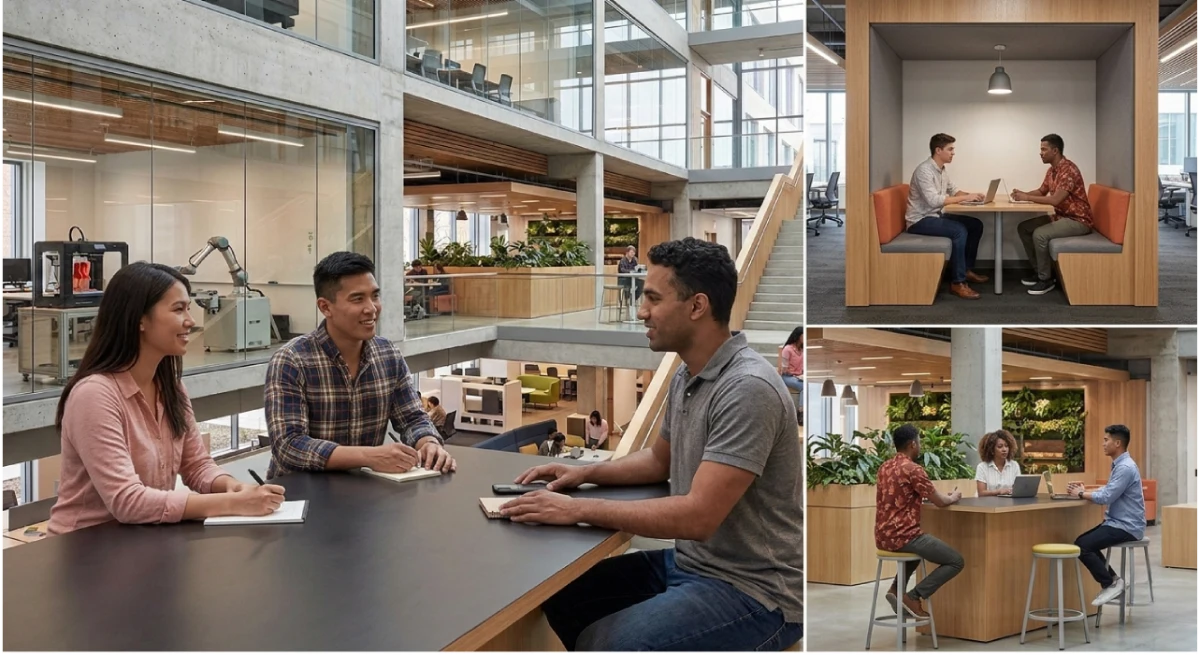
Learning happens in corridors, commons, outdoor areas, and innovation labs. Institutions that succeed design every space with intention, allowing learning to extend naturally beyond the classroom.
Flexibility: Designing for How Students Actually Learn
Modern pedagogy requires multiple learning modes within a single session. Spaces must support lecture, collaboration, and independent work without friction.
- Mobile furniture for quick reconfiguration
- Writable surfaces for visual thinking
- Distributed technology
- Acoustic zoning
- Flexible teaching positions
The best classrooms feel intuitive, adaptable, and well crafted. Flexibility supports function, while quality defines experience.
Wellbeing Is Academic Performance
Better environments lead to better outcomes.
Natural light, air quality, acoustics, and thermal comfort directly impact how students focus and retain information. These are measurable performance drivers, not aesthetic extras.
The Campus as a Recruitment Tool
For institutions competing for enrollment, the campus experience shapes perception immediately. Design communicates confidence, relevance, and care before any conversation begins.
Strong arrival experience
Vibrant social spaces
Visible technology integration
High quality shared environments
Well maintained outdoor areas
Enrollment drives revenue. A campus that communicates clarity, care, and relevance creates a long term competitive advantage.
Designing for Dual Use and Community Engagement
Spaces should extend value beyond school hours.
Designing for dual use allows campuses to support both students and the wider community, increasing utilization and long term value.
Sustainability and the Long View
Designed today to perform for decades.
Educational buildings operate on long timelines. Sustainable design reduces costs, improves efficiency, and reinforces institutional responsibility.
Space Is a Teacher
The environment teaches through experience.
Every detail of a learning space communicates expectations about creativity, collaboration, and value. These signals shape how students think and interact every day.
The best learning environments actively influence growth, not just support it.
Related Articles You May Find Helpful
Flexible Seating & Layouts
- 5 Flexible Classroom Layout Ideas Every School Should Use (2026) — 5 flexible classroom layout ideas every school should consider.
- Are Traditional Desks Holding Students Back? Flexible Seating Ideas for... — whether traditional desks are holding students back, and the alternatives.
- How Modern Classroom Layouts Unlock Student Independence — how modern classroom layouts support greater student independence.
- Small Classrooms, Big Impact: Layout Strategies for Real Collaboration — layout strategies that turn small classrooms into collaborative spaces.
Learning Environment & Trends
- Learning Spaces That Inspire: What Modern School Design Gets Right — what modern school design gets right about inspiring learning spaces.
- Nature in the Classroom: Improving Focus Through Biophilic Design — how biophilic design brings nature into the classroom to improve focus.
- The Future of Educational Space Design — 2 trends shaping the future of educational space design.
Designing or renovating a campus?
Book a consultation with our education design team at aispaces.ai