Design
Beyond the Open Office: How to Design a Workplace That Actually Reflects Your Brand

Beyond the Open Office: How to Design a Workplace That Actually Reflects Your Brand
For a decade, the open office was sold as the answer to everything: collaboration, culture, cost efficiency, and modern aesthetics. Rows of benching replaced private offices. Walls came down. Ping pong tables appeared. And then, slowly, the problems surfaced: noise complaints, lack of focus, zero privacy, and a growing sense that every office looked identical regardless of the company inside it.
The open office didn’t fail because openness is bad. It failed because it was applied as a formula rather than a strategy. The companies that get workplace design right treat their office as a direct expression of who they are — their culture, values, work patterns, and brand identity.
At AI Spaces, we’ve designed workplaces for global corporations, regional headquarters, and fast growing startups across Miami and Latin America. The biggest difference between spaces that energize a workforce and spaces that don’t is simple: intentionality. Every design decision — from the floor plan to the materials to the placement of a coffee bar — should connect back to the company’s DNA.
The Cultural Audit: Design Starts Before the First Sketch
Effective workplace design begins long before the first architectural line is drawn. Before designing a space, it is essential to study the organization itself — not just headcount or square footage, but how people actually work inside the company.
This early discovery phase often reveals insights that traditional briefs overlook. Some companies rely on constant collaboration, while others require long uninterrupted stretches of focused work. Some offices receive frequent client visits, while others function primarily as internal work environments.
Key questions explored during a cultural audit:
- How much of the workday requires collaboration versus deep focus?
- Do teams require privacy for confidential conversations?
- What workplace frustrations do employees currently experience?
- Which environments allow teams to perform at their highest level?
This process — often called a cultural audit — becomes the foundation of strategic workplace design. A financial services firm might describe itself as collaborative, yet in practice rely heavily on private conversations. A technology company may promote openness, but still require quiet engineering zones.
Design Insight: Workplaces designed without cultural intelligence often require expensive revisions within the first year as operational friction appears. When the design reflects real work patterns from the beginning, companies protect their investment and avoid costly redesigns.
When the process is done correctly, the first design is the right design.
Brand Is Not a Logo on a Wall
Many organizations say they want their office to reflect their brand. Initially, this is often interpreted as adding a logo to the reception wall or applying brand colors to furniture.
That approach produces brand decoration. It does not produce brand design.
True brand integration means that the environment communicates identity before a single word is spoken. When visitors or candidates enter the workplace, they should immediately sense what kind of company this is and what it stands for.
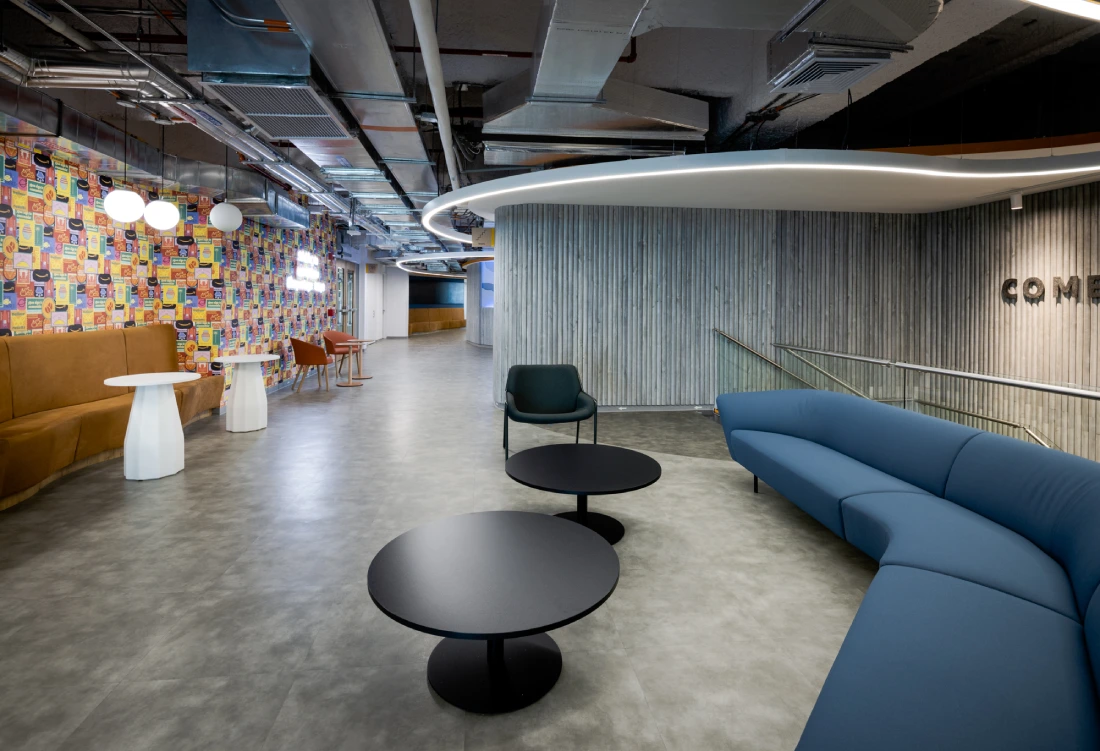
For some organizations, this means vibrant, people centered environments that reflect energy and optimism. For others, it means dynamic spaces that signal innovation and momentum.
Brand reflective workplace design operates through:
- Material language: textures and finishes that shape sensory perception.
- Spatial proportions: expansive spaces signal ambition, while smaller zones signal focus.
- Color strategy: brand colors used with intention rather than decoration.
- Furniture selection: pieces that communicate quality, craftsmanship, and modernity.
- Art and wayfinding: visual storytelling that reinforces the company's narrative.
When these elements align, the office becomes a three dimensional expression of the brand.
Designing for How People Actually Work Today
The post pandemic workplace has fundamentally changed the relationship between employees and the office. The commute is no longer automatic; it must be justified by the experience the workplace offers.
Employees now come to the office for things they cannot easily replicate at home: collaboration, social interaction, shared tools, and a psychological separation between work and personal life.
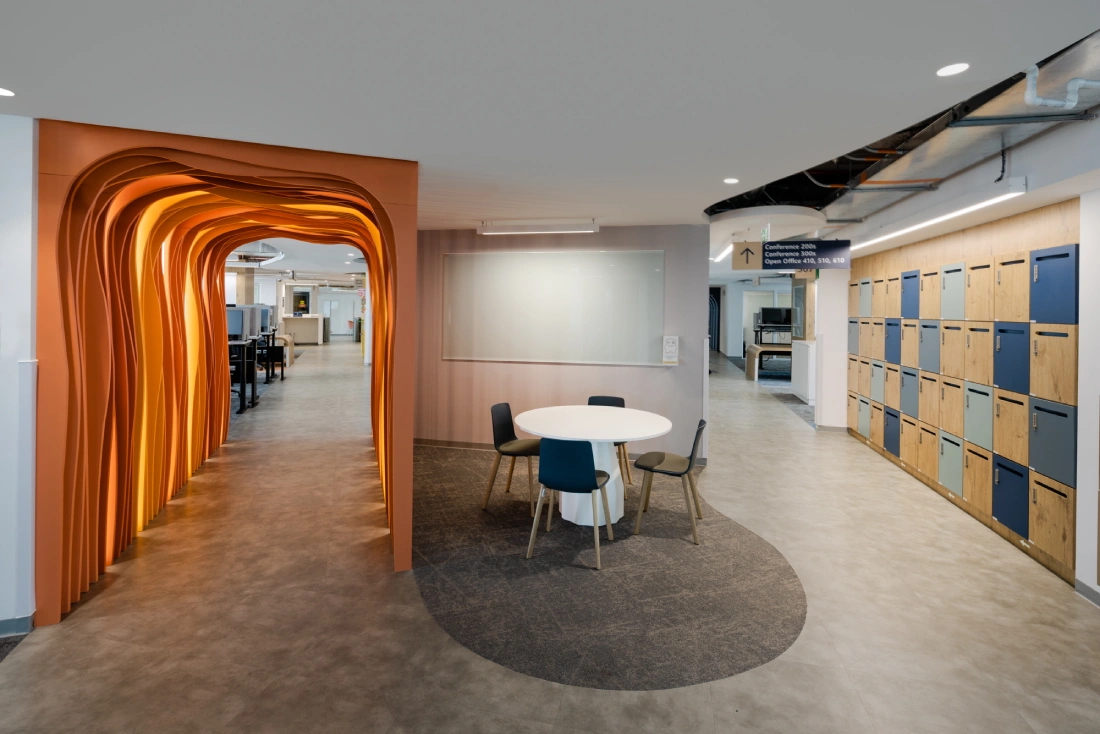
The most effective workplaces are therefore not simply open or closed. Instead, they are layered environments designed to support multiple work modes.
Essential workplace zones in modern office design:
- Focus zones — quiet areas for deep individual work.
- Collaboration zones — spaces for teamwork and spontaneous interaction.
- Social anchors — cafés, kitchens, and lounge areas where informal connections occur.
- Formal meeting rooms — enclosed spaces designed for client meetings and strategic discussions.
- Informal meeting nooks — smaller rooms for calls, one on one conversations, and quick check ins.
- Biophilic or outdoor areas — environments that significantly improve wellbeing and productivity.
The correct balance between these zones depends on how the organization actually operates, not on industry trends or layouts borrowed from other companies.
Talent Attraction Is a Design Problem
In competitive labor markets, workplace design has become a powerful recruiting tool. Candidates often evaluate company culture through the physical environment long before they speak with a hiring manager.
A generic or outdated office sends a signal — often unintentionally — that the company may not prioritize employee experience. Conversely, a thoughtfully designed workplace communicates care, authenticity, and long term commitment to people.
Operational Insight: Companies that invest in workplace design frequently report measurable HR improvements, including faster hiring cycles, higher candidate satisfaction during office visits, and improved employee retention.
The return on investment in workplace design often appears in workforce metrics: lower turnover, faster recruitment, and stronger employee engagement.
Flexibility Without Chaos
No workplace remains static. Organizations grow, teams evolve, and new work modes emerge. A workplace designed around rigid assumptions quickly becomes obsolete.
Designing for flexibility means building adaptability into the infrastructure of the office without sacrificing identity.
- Movable or modular partitions.
- Distributed power and data systems.
- Flexible furniture configurations.
- Zoning strategies that allow spaces to be repurposed.
The goal is a workplace that can evolve over a five to ten year horizon while still maintaining a strong brand identity.
Sustainability as a Cultural Statement
For many modern organizations — particularly multinational companies and those with ESG commitments — sustainability is no longer optional.
Standards such as LEED certification, WELL building principles, low-VOC materials, and energy efficient systems have become baseline expectations in corporate workplace design.
Beyond compliance, these decisions communicate something powerful about company values. When employees see that their organization invests in a healthier environment, it reinforces a deeper sense of purpose.
Ready to design a workplace your team won't want to leave?
Book a free strategy session at aispaces.ai and discover how intentional workplace design can transform your organization's culture and performance.
AI Spaces LLC | aispaces.ai | Interior Architecture & Design for Corporations