Design
The Guest Experience Starts at the Lobby: Designing Hospitality Spaces That Build Loyalty

A guest decides how they feel about a hotel within the first ninety seconds of arrival. Before they've spoken to a staff member, before they've seen their room, before they've checked the minibar , the lobby has already communicated something. Whether that something is warmth, excitement, calm, luxury, or indifference depends entirely on how the space was designed.
Hospitality is one of the most demanding design contexts that exists. Unlike a corporate office, where the primary audience is a familiar employee population, a hospitality environment must speak simultaneously to a diverse range of guests , business travelers and leisure vacationers, solo visitors and family groups, locals using the bar and international guests navigating unfamiliar surroundings. It must function flawlessly at 7 AM and at midnight. It must feel welcoming on a Tuesday in January and exhilarating on a Friday in peak season.
And it must do all of this while generating revenue because in hospitality, design is not a support function. It is a profit center.
At AI Spaces, we design hospitality environments that balance the full complexity of this challenge: spaces that create memorable guest experiences, reinforce brand identity, drive ancillary revenue, and perform reliably over time. Here is what that requires.
The Lobby: First Impression, Last Memory
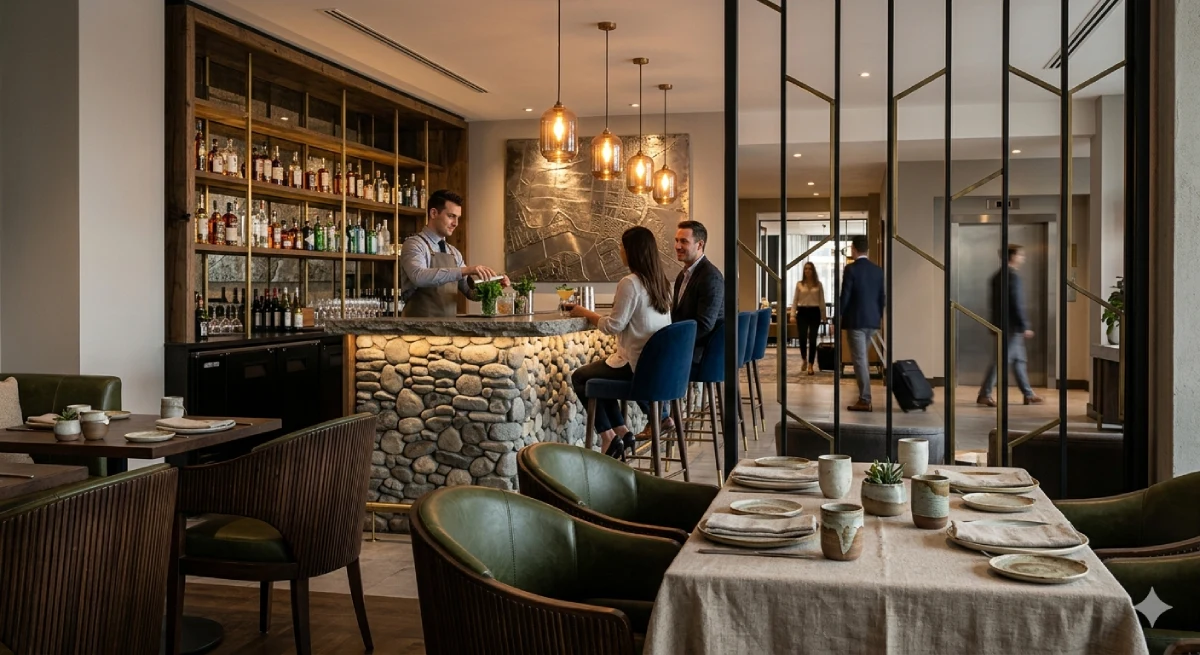
The lobby is the physical embodiment of the brand promise.
The lobby is the most strategically important space in any hotel. It is the first environment a guest enters and , if designed correctly, a space they return to throughout their stay. It is the physical embodiment of the brand promise. Every material, every lighting decision, every piece of furniture in the lobby communicates what kind of property this is and what kind of stay a guest can expect.
The most common mistake in lobby design is treating it as a transactional space , a corridor between the entrance and the elevator bank. Lobbies designed this way are passed through, not inhabited. They generate no dwell time, no ancillary spend, no social energy, and no memorable impression.
The lobbies that build loyalty are designed as destinations. They invite guests to arrive early, linger after checkout, bring colleagues for a drink, open a laptop for an hour. They accomplish this through:
- A clear spatial hierarchy that orients guests immediately without requiring signage
- Lighting that creates warmth and intimacy at human scale
- Furniture zoning that supports multiple simultaneous uses
- A sensory anchor : Scent, sound, or material texture
- A visual focal point that establishes the aesthetic of the property
When the lobby works as a destination, it drives revenue across every adjacent outlet , because guests who inhabit the space spend. That is a design outcome with a direct line to the P&L.
F&B Spaces: The Engine of Non-Room Revenue
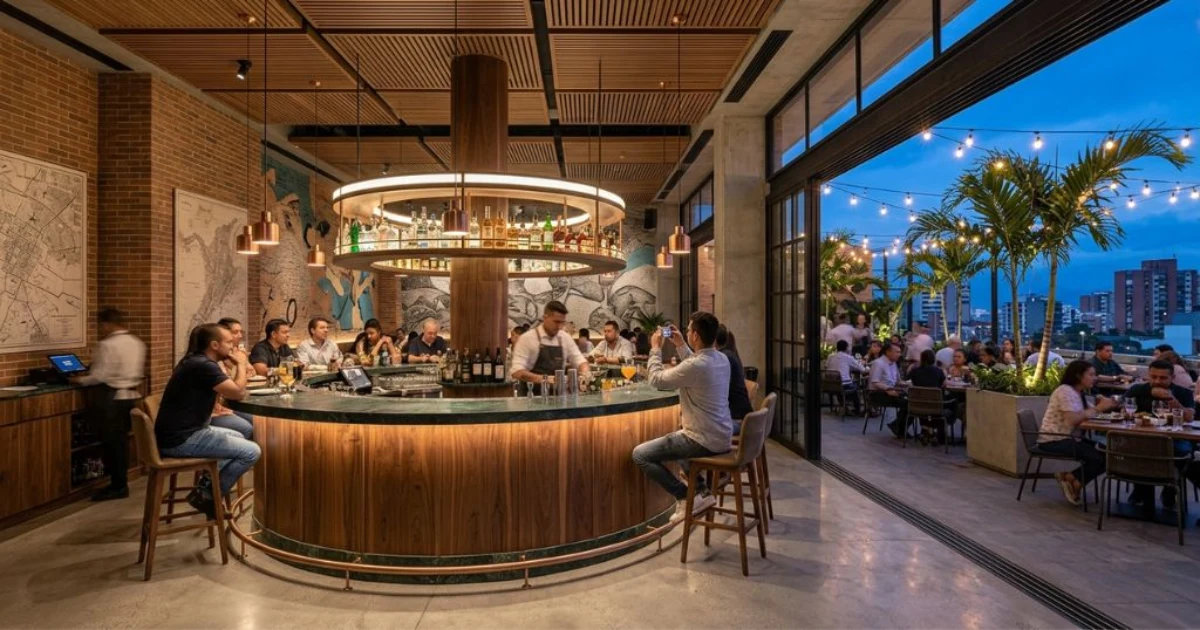
A hotel bar that locals choose over every other option is a revenue engine.
For most full-service hotels, food and beverage is the largest source of non-room revenue. A hotel restaurant or bar that fails to attract local guests leaves enormous revenue potential unrealized. One that becomes a destination for the surrounding neighborhood transforms the property's economics.
The design challenge is to create spaces that feel aligned with the hotel brand and genuinely appealing to an external audience. This requires a distinct identity , not a generic hotel aesthetic, but a space with its own personality.
- A bar as the social heart of the space
- Lighting that flatters both guests and food
- Acoustic design aligned with the concept
- A narrative tied to local context
- Outdoor space where possible
Designing for the Bleisure Traveler
The modern traveler expects both performance and experience.
The bleisure traveler represents a growing share of hotel demand. This guest needs spaces that support focused work and meaningful leisure simultaneously.
- Guest rooms with real work areas
- Lobby zones for laptop use
- F&B spaces for solo or working dining
- Local design cues that connect to the destination
- Fitness and wellness spaces that support routine
Brand Consistency Across a Portfolio
For hotel groups, design must ensure consistency without uniformity. Guests expect predictable quality, but also meaningful local differentiation.
The strongest brands achieve calibrated distinctiveness ,a balance between global standards and local identity. This requires discipline at the brand level and creativity at the property level.
Sustainability as a Hospitality Value Proposition
Sustainability is no longer optional. It is a selection criterion.
A growing segment of guests actively seeks sustainable properties. Beyond guest perception, sustainable design reduces operating costs and improves long-term asset value.
It is not a trade-off. It is a performance driver.
The Repositioning Opportunity
Many projects involve repositioning existing hotels. Done well, this can transform a struggling asset into a market leader.
- Define the target guest clearly
- Assess what to keep vs replace
- Phase construction strategically
- Prioritize durable, timeless design
Every Detail Is the Experience
The experience is the sum of every detail.
In hospitality, there is no neutral design decision. Every element contributes to the guest experience and determines whether they return or recommend the property.
At AI Spaces, we design hospitality environments that guests remember long after checkout. Because the memory of a space is the most powerful competitive advantage a property can have.
Small-Space Floor Plans
- Maximizing Every Square Foot — how to lay out a small restaurant to use every square foot.
- Small Restaurants, Big Impressions: Smart Design Ideas That Work — smart design ideas that help small restaurants make a big impression.
Lighting & Atmosphere
- Light Up Your Sales — lighting tips that set the mood and improve the guest experience.
- The Art of Restaurant Lighting Design — the art and science behind effective restaurant lighting.
- How to Create a Cozy Restaurant Interior That Guests Never Want to Leave — how to design a cozy interior guests keep coming back to.
Business Impact & Branding
- From Concept to First Cover — how design choices shape a restaurant's success from concept to opening.
- Design for Dollars — how the right interior boosts sales in fast- vs. full-service restaurants.
- Renovating Your Restaurant — how a smart renovation boosts both brand and bottom line.
- Why Restaurant Layout and Branding Are Your Best Design Strategy — why layout and branding work together as a restaurant's best strategy.
- The Importance of Professional Architectural Design in Restaurant Layouts — the role professional architecture plays in restaurant layouts.
Trends
- Top Restaurant Interior Design Trends for 2026 — the restaurant interior trends worth watching in 2026.
- The Future of Luxury Restaurant Interiors — where luxury restaurant interiors are headed next.
Renovation & Vendor Selection
- How to Choose a Restaurant Renovation Company Without Overpaying — how to choose a renovation company without overpaying.
- Boutique Hotel Restaurant Design Firm in Miami — whether a boutique hotel restaurant can renovate without closing.
- 5 Costly Commercial Kitchen Design Mistakes (And How to Avoid Them) — 5 costly kitchen design mistakes, and how to avoid them.
Hospitality & Hotel
- The Guest Experience Starts at the Lobby — how hospitality spaces build lasting guest loyalty, starting at the lobby.
- Designing the 5-Star Guest Experience — a guide to designing interiors that deliver a 5-star guest experience.
- The Hospitality Design Matrix — how to choose back-of-house materials that actually hold up.
- First Impressions That Last — design ideas for hotel lobbies that make a lasting impression.
Technology
- Smart Restaurants — how IoT and AI are being integrated into restaurant design.
Building or repositioning a hospitality property?
Talk to our team about what's possible: aispaces.ai