Design
The Design Choices That Instantly Change How a Small Restaurant Feels

Cover image of the Marriott project by Santiago Muñoz.
Every square foot counts in a small restaurant. Whether you are operating in Miami's Wynwood Arts District, a Fort Lauderdale beachfront strip, an Orlando food hall, or a neighborhood dining block in Tampa, the challenge is the same: how do you make a compact space feel vibrant, open, and worth visiting again?
The answer is not always renovation. Often, it is a sequence of precise design decisions, about lighting, seating, materials, and circulation, that collectively transform how a space reads and feels. This guide breaks down the choices that matter most, explains the difference between smart and poor decisions in each category, and shows how those choices directly affect the guest experience.
Why Small Restaurant Design Decisions Compound
In a small restaurant, every design decision affects every other one. A ceiling treatment changes how lighting feels. Seating density affects circulation. Material choices affect acoustics. The best small restaurant interiors are not collections of individual good choices; they are systems of decisions that reinforce each other toward a unified experience.
Understanding this compounding effect is the starting point for any small restaurant redesign. Poor designers make decisions in isolation. Great designers make decisions in relationship to each other.
1. Lighting Temperature: The Single Fastest Way to Change the Atmosphere
The Poor Choice
Cool white or neutral LED lighting (4000K–6500K color temperature) is cheap, bright, and wrong for almost every dining environment. It creates a clinical, fast-food register that makes guests feel surveilled rather than relaxed. It also renders food colors poorly, which in the era of food photography and social media, is a commercial liability.
The Smart Choice
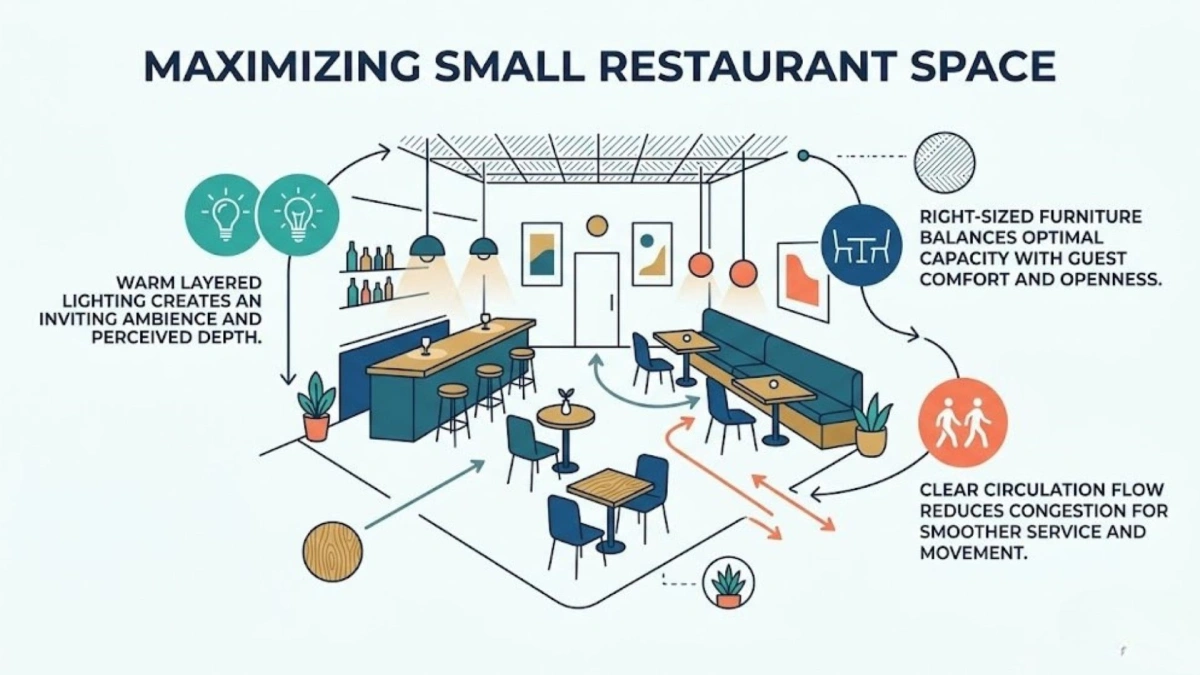
Warm lighting in the 2700K to 3000K range creates the golden, inviting atmosphere that defines memorable dining experiences. Layer it across three levels: ambient overhead light, task lighting at tables or counters, and accent lighting on walls, artwork, or bar shelving. This layered approach adds perceived depth to the space, making it feel larger and more intentional.
Dimmable fixtures give the room versatility, brighter for lunch service, warmer and more intimate for dinner, without requiring any physical change to the space.
How AI Spaces Approaches This Differently
AI Spaces specifies lighting as a layered system, not a single fixture decision. Every restaurant project includes a lighting plan that accounts for color temperature, directionality, dimming capability, and the specific visual atmosphere the brand wants to create across different dayparts.
2. Seating Density and Furniture Scale: The Compression Problem
The Poor Choice
Maximizing cover count by using oversized furniture or cramming tables too close together is the most common mistake in small restaurants. It creates a space that feels compressed, noisy, and uncomfortable. Guests feel they are eating in someone else's conversation. The experience suffers, and so does return rate.
The Smart Choice
Right-sizing furniture to the space, using slimmer chairs, smaller table bases, and a mix of two-tops that can be pushed together, creates the same cover count with significantly more perceived openness. Banquette seating along walls maximizes floor efficiency while creating a sense of enclosure that guests read as cozy rather than cramped.
The general rule: 18 to 24 inches between tables is the minimum for comfortable dining. Going below this threshold is felt by every guest, even if they cannot articulate why.
How AI Spaces Approaches This Differently
AI Spaces conducts a seating density analysis as part of every restaurant design engagement, balancing revenue-generating cover count against the guest experience threshold that protects long-term revenue through repeat visits and word-of-mouth.
3. Circulation Flow: The Hidden Driver of Comfort
The Poor Choice
Poor circulation design forces servers and guests to navigate the same narrow paths, creating constant interruption and the feeling that the restaurant is always at capacity, even when it is not. In small Florida restaurants where outdoor pedestrian traffic adds energy to the street presence, an interior that feels congested loses its appeal quickly.
The Smart Choice
Clear main circulation aisles of at least 36 to 44 inches allow server and guest traffic to coexist without conflict. The kitchen pass, host stand, and bar should be positioned so they do not create bottlenecks at high-traffic moments. Even in a very small restaurant, the perception of flow, the sense that movement through the space is easy and natural, dramatically affects how spacious the room feels.
How AI Spaces Approaches This Differently
AI Spaces maps circulation flow in every restaurant project before finalizing any layout, ensuring that front-of-house operations run smoothly at peak service and that guests experience the space as open and easy to move through.
4. Ceiling Treatment: The Most Underutilized Design Tool in Small Restaurants
The Poor Choice
A flat, unaddressed ceiling with surface-mounted lighting is a missed opportunity in almost every small restaurant. It makes the room feel institutional and does nothing to add visual interest or perceived height.
The Smart Choice
Even modest ceiling interventions have outsized impact. Painted ceilings in a dark, rich color draw the eye upward and add dramatic depth to a small space. Exposed structural elements, beams and ductwork painted out in black or deep charcoal, add character without cost. Wood slat ceilings or coffered details introduce texture that bounces light beautifully and elevates the material quality of the entire room.
In Miami-area restaurants particularly, tropical design influences make natural wood ceiling elements especially resonant, connecting the interior to the regional landscape while creating warmth and visual richness.
How AI Spaces Approaches This Differently
AI Spaces treats the ceiling as the fifth wall, a full design surface rather than an afterthought. Every restaurant project considers ceiling treatment as part of the spatial composition, not an optional upgrade.
5. Materials and Texture: What Creates a Sense of Place
The Poor Choice
Generic materials, laminate tabletops, stock tile, painted drywall with no texture, produce a space that looks temporary and forgettable. In the Florida dining market, where competition for Instagram-worthy aesthetics is intense in cities like Miami, Orlando, and Fort Lauderdale, material blandness is a competitive disadvantage.
The Smart Choice
Materials with natural variation and tactile quality create spaces that photograph well and feel substantial in person. Reclaimed wood, handmade ceramic tile, textured concrete, terrazzo, rattan, woven textiles, and unlacquered brass all improve with age and give a small restaurant a sense of authenticity that chain aesthetics cannot replicate. The key is not expense; it is intentionality. One strong material decision executed well is more powerful than ten generic ones.
How AI Spaces Approaches This Differently
AI Spaces builds a material strategy for every restaurant project, identifying the one or two signature material moments that will define the space's identity, then supporting them with a cohesive secondary palette. The result is restaurants that feel designed and distinctive, not assembled from a catalog.
6. Acoustics: The Guest Experience Factor Nobody Talks About Until It Is a Problem
The Poor Choice
Hard surfaces on every plane, concrete floors, tile walls, flat ceilings, glass partitions, create restaurants that are acoustically punishing. At peak service, the noise level forces guests to shout across the table. This discomfort shortens visits and drives negative reviews, even when food quality is excellent.
The Smart Choice
Strategic acoustic treatment does not require panels that look clinical. Soft furnishings, upholstered banquettes, fabric window treatments, area rugs, acoustic plaster or spray-applied ceiling treatments, and even dense plantings all absorb sound without compromising aesthetics. The goal is not silence; it is a controlled noise environment where conversation is comfortable.
How AI Spaces Approaches This Differently
AI Spaces incorporates acoustic planning into every restaurant design, specifying materials and finishes that manage the sound environment without requiring visible acoustic intervention. Guest comfort is treated as a design metric, not an afterthought.
7. Color Palette and Visual Lines: Creating Perceived Space
The Poor Choice
Dark walls in a small restaurant without strong natural light make the space feel smaller and heavier. Conversely, all-white interiors in bright Florida sunlight can feel harsh and clinical. Equally problematic: inconsistent color palettes that fragment the visual experience and make the space feel smaller than it is.
The Smart Choice
A cohesive palette of three to four colors, anchored by one medium-toned wall color, supported by natural wood or stone, and accented with a single bold color used sparingly, creates visual coherence that makes a small space read larger. Vertical elements such as tall windows, floor-to-ceiling millwork, and vertical tile patterns draw the eye upward and increase perceived ceiling height. Mirrors used deliberately, not generically, can extend sightlines and amplify natural light.
How AI Spaces Approaches This Differently
AI Spaces develops a complete color and material palette for every restaurant project, testing how colors read under the specific lighting conditions of the space before specifying anything. What looks right on a sample board and what looks right on a wall at 6 PM with warm dimmed lighting are often very different.
Frequently Asked Questions
What design choices instantly make a small restaurant feel bigger?
- Warm layered lighting that adds depth.
- Mirrors used to extend sightlines.
- Vertical design elements that draw the eye upward.
- Furniture right-sized for the space rather than oversized.
- A cohesive material palette that creates visual continuity rather than fragmentation.
How does lighting temperature affect restaurant atmosphere?
Lighting in the 2700K to 3000K range creates warmth and intimacy that is universally associated with positive dining experiences. Cooler light (4000K+) creates a clinical, fast-food register that shortens guest dwell time and photographs poorly. In a small restaurant, lighting temperature is the single fastest lever for changing how the space feels.
What seating density is recommended for a small restaurant?
A minimum of 18 to 24 inches between tables is the threshold for comfortable dining. Going below this is felt by guests even when they cannot articulate it. The right balance maximizes cover count without creating the compressed feeling that shortens visits and reduces return rates.
Why does acoustics matter so much in small restaurant design?
Poor acoustics, caused by too many hard surfaces, create noise levels that force guests to shout across the table. This discomfort shortens visits, drives negative reviews, and reduces repeat business. Acoustic design does not require visible treatment panels; it can be integrated into material choices, soft furnishings, and ceiling treatments.
What materials work best for creating a distinctive small restaurant interior?
Materials with natural variation and tactile quality, reclaimed wood, handmade ceramic tile, terrazzo, woven rattan, textured plaster, and unlacquered brass, create spaces that feel authentic and photograph well. The goal is one or two signature material moments executed with intention, not a collection of generic finishes.
Conclusion
A small restaurant's design is not a limitation; it is a creative constraint that, when worked with deliberately, produces spaces that feel more intimate, more memorable, and more brand-aligned than many larger venues. The decisions that matter most are not about budget; they are about sequence: understanding how lighting, materials, acoustics, seating, and circulation interact to create a unified guest experience.
AI Spaces works with restaurant owners across Miami, Fort Lauderdale, Orlando, and Tampa to make exactly these decisions with precision, creating interiors that improve guest comfort, drive social media visibility, and build the kind of dining environments that guests come back to.
Explore restaurant design at aispaces.ai